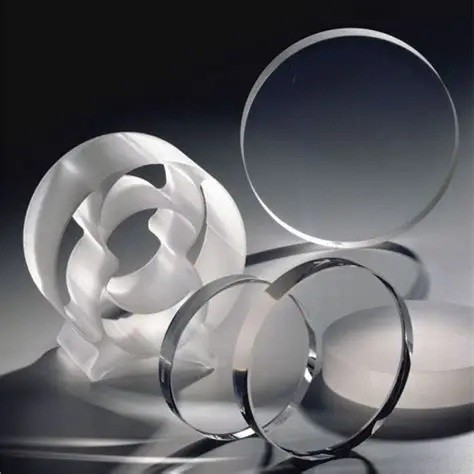

High Purity Fused Silica
- Product Item : AT-61149
- Category: Glass-Ceramic Optical Substrates (Distribution Agency)
- Product description:Fused Silica is offered in many different grades to support various product applications. Glass codes 7980, 7979, and 8655 are high purity non-crystalline silica glasses with excellent optical qualiti
High Purity Fused Silica
Fused Silica is offered in many different grades to support various product applications. Glass codes 7980, 7979, and 8655 are high purity non-crystalline silica glasses with excellent optical qualities.
Product characteristics include extraordinary low refractive index variations leading to state-of-the-art homogeneity values, lowest birefringence values, large size capabilities, exceptional transmittance from the deep ultraviolet through the infrared region, and an ultra-low thermal expansion coefficient; all of which are critical to our customers’ demanding needs.
Summary of Key Attributes
|
Attribute |
Fused Silica |
||||||
|
7980 Standard Grade |
7980 KrF Grade |
7980 ArF Grade |
7980 Mirror Grade |
7980 Industrial Grade |
7979 IR Grade |
8655 ArF Grade |
|
|
Visible TransmittanceTransmittance |
■ |
■ |
■ |
■ |
■ |
■ |
■ |
|
UV Transmittance |
■ |
■ |
■ |
|
|
|
■ |
|
Infrared Transmittance |
|
|
|
|
|
■ |
■ |
|
Homogeneity Certified in Use-Axis AA, A, C, F (By Size) |
■ |
■ |
■ |
|
|
■ |
■ |
|
Inclusion Class Certified 0, 1, 2, 5 |
■ |
■ |
■ |
■ |
|
■ |
■ |
|
Striae Certified |
■ |
■ |
■ |
■ |
|
■ |
■ |
|
Homogeneity Certified in Off-Axis AA, A, C, F (By Size) |
■ |
■ |
■ |
|
|
■ |
■ |
|
Low Birefringence |
■ |
■ |
■ |
■ |
|
■ |
■ |
|
UV Laser Resistant |
|
■ |
■ |
|
|
|
■ |
|
Economical |
|
|
|
|
■ |
|
|
Quality Grade Selection Chart
For Mirror Grade - see chart on next page
|
Inclusion Class |
Homogeneity 3,4 [ppm] |
|||||||||
|
Grade |
||||||||||
|
Class |
Total Inclusion |
Maximum Size2 [mm] |
AA |
A |
B |
C |
D |
E |
F |
G |
|
0 |
≤0.03 |
0.10 |
■ |
■ |
■ |
■ |
■ |
■ |
■ |
■ |
|
1 |
≤0.10 |
0.28 |
|
■ |
■ |
■ |
■ |
■ |
■ |
■ |
|
2 |
≤0.25 |
0.50 |
|
|
■ |
■ |
■ |
■ |
■ |
■ |
|
3 |
≤0.50 |
0.76 |
|
|
|
■ |
■ |
■ |
■ |
■ |
|
4 |
≤1.00 |
1.00 |
|
|
|
■ |
■ |
■ |
■ |
■ |
|
5 |
≤2.00 |
1.27 |
|
|
|
■ |
■ |
■ |
■ |
■ |
1. Defines the sum of the cross section in mm2 of inclusions per 100 cm3 of glass. Inclusions with a diameter ≤ 0.10 mm are disregarded.
2. Refers to the diameter of the largest single inclusion.
3. Index homogeneity: the maximum index variation (relative), measured over the clear aperture of the blank.
4. Index homogeneity is certified using an interferometer at 632.8 nm. The numerical homogeneity is reported as the average through the
piece thickn