
7972 Ultra Low Expansion Glass
- Product Item : AT-61155
- Category: Glass-Ceramic Optical Substrates (Distribution Agency)
- Product description:7972 Ultra Low Expansion Glass is a titania silicate glass with unique characteristics that have made it the material of choice in applications ranging from machine tool reference blocks to solid and
7972 Ultra Low Expansion Glass
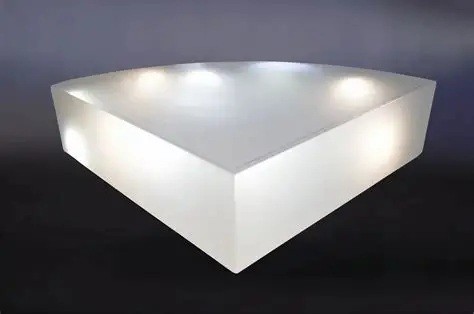
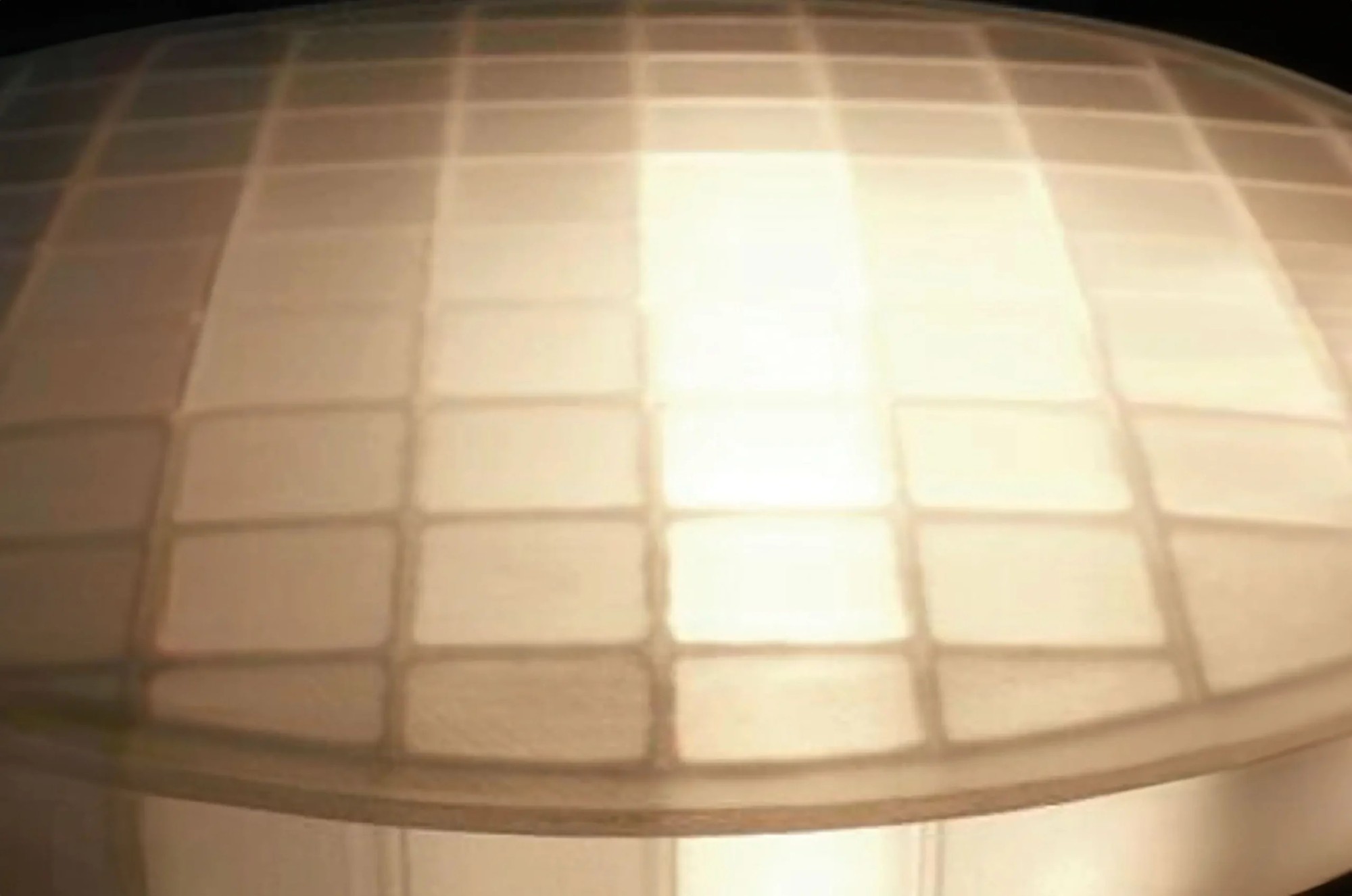
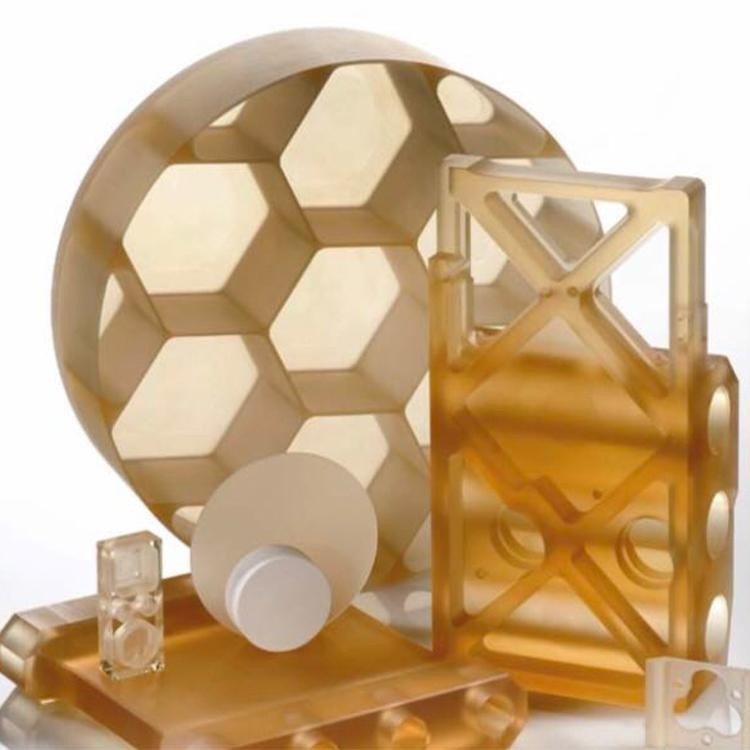
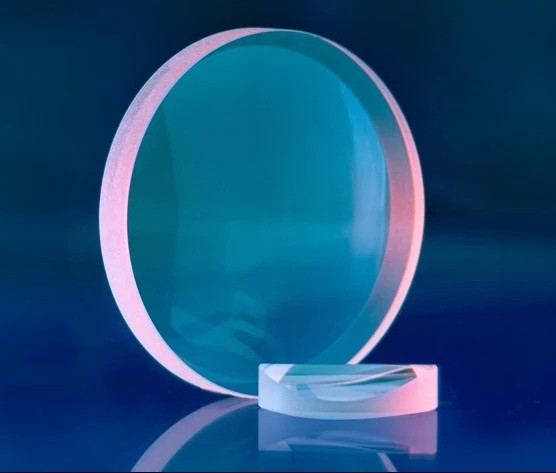
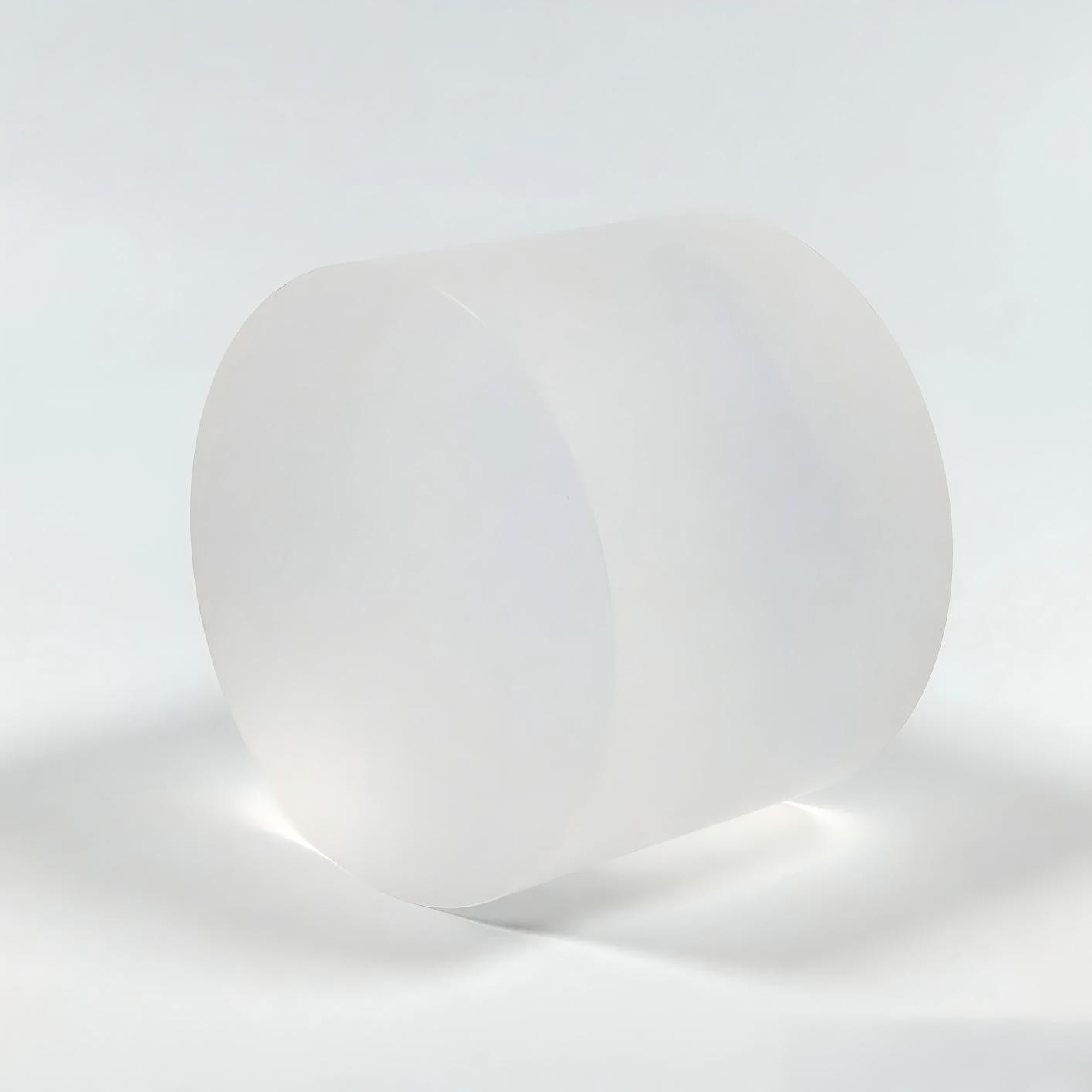
7972 Ultra Low Expansion Glass is a titania silicate glass with unique characteristics that have made it the material of choice in applications ranging from machine tool reference blocks to solid and lightweight mirror blanks for large astronomical telescopes and space satellite applications. It is formed as 1.5-meter boules from which virtually any size or shape product can be made.
Near Zero Thermal Expansion is the key attribute for which system designers specify the Ultra Low Expansion Glass. This material offers superior dimensional stability ~
 Coefficient of thermal expansion (CTE) is nominally zero at room temperature
 Expansivity can be adjusted to provide zero CTE at other temperatures when needed for specific applications
 High homogeneity of CTE within boules enables efficient material utilization
 CTE is nondestructively measured on all Ultra Low Expansion boules, enabling precision engineering and analysis of the thermal response of products in the end use environment
Fabrication Flexibility is the key to product design freedom. We utilizes several key manufacturing processes which enable the production of a variety of products ~
 Monolithic solids from a few centimeters to over 8 meters in diameter
 Lightweight fusion bonded structures offering up to 80% weight reduction over the same sized solid
 Ultralightweight frit bonded structures with up to 95% weight reduction are possible using a proprietary glass ceramic frit designed to closely match the thermal expansion of ULE® glass.
Mean Linear Coefficient of Thermal Expansion (CTE)
The guaranteed maximum limits for the mean linear CTE are as follows:
The mean linear CTE shall be 0 ± 30 ppb/°C from 5°C to 35°C with a 95% confidence level.
Quality Grade Selection Chart
|
|
Maximum CTE Variation(ppb/°C) |
OpticalRetardation |
Inclusions |
Special grades and sizes available on request |
||
|
Grade |
Radial Range |
Axial Range |
Birefringence(nm/cm) |
Inclusion Quality |
Diameter< 20" |
Diameter20" to 56" |
|
Premium Grade |
10 |
10 |
10 |
Inclusion max mean diameter: Inclusions per cubic inch: Avg. no. of inclusions per cu. in.: |
0.040" 4 0.1 |
N/A |
|
Mirror Grade |
15 |
15 |
20 |
Critical Zone: Inclusion max mean diameter: Inclusions per cubic inch: Avg. no. of inclusions per cu. in.: |
0.040" 4 0.1 |
0.080" 6 0.2 |
|
Non-Critical Zone: Inclusion max mean diameter: Inclusions per cubic inch: Avg. no. of inclusions per cu. in.: |
0.100" N/S 0.2 |
0.250" N/S 0.6 |
||||
|
Standard Grade |
15 |
15 |
20 |
Inclusion max mean diameter : Inclusions per cubic inch: Avg. no. of inclusions per cu. in.: |
0.100" N/S 0.2 |
0.250" N/S 0.6 |
|
Tooling Grade |
N/A |
N/A |
N/A |
N/A |
Contact for availability. |
|
◆ CTE verification is performed using a non-destructive ultrasonic method.
◆ Excellent long term dimensional stability is exhibited at room temperature. No residual figure change is observed when taking an optic from 350°C to water quench.
◆ There has been no measurable delayed elastic effect. This is an important consideration when large strain is present during fabrication or when environmental loading is present, such as during gravity release or dynamic control of active optics.
◆ No measurable hysteresis results from thermal cycling.
Thermal Properties
|
Mean Linear Coefficient of Thermal Expansion 5°C to 35°C (α ) |
0 ± 30 x 10-9/K [0 ± 30 ppb/°C] |
Mean Specific Heat (Cp) |
767 J/(kg * °C) [0.183 cal/(g *°C)] |
|
Thermal Conductivity (K) |
1.31 w/(m *°C) [1.13 kcal/(m * h * °C)] |
Strain Point |
890°C [1634°F] |
|
Thermal Diffusivity (D) |
0.0079 cm2/s |
Annealing Point |
1000°C [1832°F] |
|
D.C. Volume Resistivity, 200°C 100Hz (R) |
1011.6 ohm * cm |
Softening Point (estimated) |
1490°C [2714°F] |
Mechanical Properties
|
Poisson's Ratio (v) |
0.17 |
Specific Stiffness (E/p ) |
3.12 x 10⁶ m [1.23 x 10⁸ in] |
|
Ultimate Tensile Stress (MOR) |
49.8 MPa [7220 psi] |
Shear Modulus (G) |
29.0 GPa [4.20 x 10⁶ psi] |
|
Knoop Hardness, 200g load |
460 kg/mm2 |
Bulk Modulus (K) |
34.1 GPa [4.95 x 10⁶ psi] |
|
Density (p ) |
2.21 g/cm3 [0.079 lb/in3] |
Elastic Modulus (E) |
67.6 GPa [9.80 x 10⁶ psi] |
Optical Properties
|
Stress Optical Coefficient |
4.15 (nm/cm)/(kg/cm2) [0.292 (nm/cm)/psi] |
Abbé Number (vd) |
|
53.1 |
|
Refractive index |
nF (486 nm) 1.4892 |
dn/dt |
|
|
|
(nominal CTE Material) |
nD (589 nm) 1.4828 |
|
20-40°C |
10.68 x 10⁻⁶/°C |
|
nC (656 nm) 1.4801 |
|
40-60°C |
11.24 x 10⁻⁶/°C |
Chemical Durability

◆ Excellent resistance to weathering
◆ Exhibits virtually no surface clouding or electrical surface leakage when subjected to attack by water, sulfur dioxide, and other atmospheric gases.
◆ High resistance to attack by nearly all chemical agents.
|
Solution at 95°C |
Test Duration |
Weight Lossmg/cm2 |
|
5% HCl |
24h |
< 0.01 |
|
5% NaOH |
6h |
0.9 |
|
0.02N Na2CO3 |
6h |
0.02< |